
Specs are compiled from manufacturer listings and verified buyer reviews and can change over time — please confirm the key details on the product page before buying.
If you have ever pressed a cheap chestpiece to a patient and heard nothing but your own heartbeat, you already know the real problem. Most budget stethoscopes do not “sound bad” — they block the very low-frequency sounds you are listening for, like the Korotkoff sounds that tell you a blood pressure reading. The fix is choosing the right chestpiece design at the right price tier, and this guide covers six scopes that earn their cost.
This guide is built by comparing the manufacturers’ published specifications and the patterns across verified customer reviews, so you get each pick’s real strengths and trade-offs instead of marketing spin.
You will see dual-head and tunable-diaphragm chestpieces explained in plain terms, plus the weight and tube-length differences that decide whether a scope survives a twelve-hour shift around your neck. The shortlist below covers the best affordable stethoscopes for students, new nurses, and anyone building a first clinical bag.
Top Picks


How To Choose The Best Affordable Stethoscope
Start with the one thing that decides everything else: whether the chestpiece can reproduce low-frequency sound. Heart murmurs and blood pressure sounds live down low, and a scope that only amplifies high frequencies will feel “loud” while telling you almost nothing. From there, weight and ear-tip seal are what determine whether you will actually wear it all day.
Chestpiece design is the whole ballgame
A dual-head chestpiece gives you a true bell for low frequencies and a true diaphragm for high ones, and you flip between them with a rotating stem. A tunable diaphragm does the same job in a single head — you press lightly for low sounds and firmly for high ones. Neither is automatically better; a dual head is more intuitive for students, while a tunable single head is faster when you are moving between patients with one hand.
Weight and tubing length fight each other
Lighter scopes are kinder to your neck over a shift, and the numbers here run from a few ounces up to nearly three-quarters of a pound. But a longer tube gives you more reach across a bed and can isolate you better from room noise. If you work across a bed, favor a longer tube; if you move through tight spaces, favor a shorter one.
The eartips and seal matter more than you think
A loose seal leaks sound and ruins an otherwise good chestpiece. Look for soft-sealing or silicone eartips, and check whether spare pairs and an extra diaphragm ship in the box — on a budget scope, replacement parts are the difference between a two-year tool and a ten-year one.
Side-by-Side Comparison
| Model | Best For | Chestpiece | Weight | Length | Amazon |
|---|---|---|---|---|---|
| MDF Acoustica MDF747XPBO★ Best Overall | First clinical scope on a tight budget | Dual head (bell + diaphragm) | 4.83 oz | 9.5 inches | Amazon |
| ADC Adscope 619Featherweight Pick | Long shifts where neck comfort rules | Tunable AFD | 3.7 oz (105 g) | 30 inches | Amazon |
| Prestige Teaching Sprague | Instructors teaching auscultation | Sprague-Rappaport, two tube sets | 11.29 oz | 31.5 inches | Amazon |
| Greater Goods Dual-Head | Stainless steel build that lasts | 360° rotating dual head | — | 29 inches | Amazon |
| 3M Littmann Lightweight II S.E. | All-day carry with a teardrop head | Dual-sided tunable + open bell | 118 g | 28 inches | Amazon |
| Littmann Classic III 5620 | Serious floor and ward use | Tunable dual-sided stainless | 0.35 kg | — | Amazon |
Detailed Reviews
1. MDF Instruments Acoustica Lightweight MDF747XPBO
The budget scope that hands a student a real bell and a real diaphragm for the price of a takeout dinner.
At 4.83 ounces, the MDF747XPBO is light enough to forget it is around your neck during a clinical rotation. That weight explains why it keeps coming back as the default first scope. The chestpiece is a true dual-head design with a fully rotating stem — one side is a bell for low-frequency sounds, the other a diaphragm for high ones. It is handcrafted from aluminum rather than the stamped metal you get at this tier.
Compare that to the Prestige Teaching Sprague further down the list, which runs 31.5 inches and 11.29 ounces. The MDF is a fraction of that heft and about a third of the length, so it tucks into a scrub pocket instead of swinging into a patient’s IV line. The 9.5-inch span is genuinely compact. It comes with three pairs of eartips in small, regular, and large, so you can find a seal instead of tolerating a leaky one.
What keeps this at the top for most buyers is the support behind it. A full lifetime warranty plus a replacement-parts-for-life program means a lost eartip does not retire the instrument, and an extra diaphragm ships in the box. The one thing to weigh honestly: a lightweight aluminum chestpiece will not isolate sound the way a heavier stainless head does, so if you are heading into a noisy ICU, step up to the stainless picks below.
What earns the top slot
- True bell and true diaphragm on one rotating stem, so both frequency ranges are covered
- 4.83 ounces keeps neck fatigue low through a long shift
- Lifetime warranty and free replacement parts for as long as you own it
- Three eartip sizes plus a spare diaphragm included
Where it shows its price tier
- Aluminum chestpiece lets in more room noise than a stainless head
- At 9.5 inches it is short — less reach across a bed than a 28-inch scope
Start here if: you are a student or new grad buying your first scope and want both frequency ranges without gambling on quality.
Step up if: your unit is loud and you need a stainless chestpiece to block ambient sound.
2. ADC Adscope 619 Ultra-Lite Clinician Stethoscope
At 3.7 ounces it is the lightest adult scope on this list — and it does not ask you to give up low-frequency response to get there.
Weight is the headline: 105 grams, or 3.7 ounces, spread across a 30-inch length. That combination is unusual, because a longer tube usually means more mass. ADC gets there with a clinician headset built on aluminum alloy binaurals and a silicone reinforcing yoke molded into phthalate-free PVC tubing, so the frame holds its shape instead of flopping.
The acoustic side uses AFD technology — the letters stand for “acoustic frequency differentiation,” which in plain terms means the chestpiece answers to pressure. Press lightly and you pull in low frequencies; press firmly and the high frequencies come forward. You get an extra-deep bell for low response and an ultra-sensitive diaphragm for crisper highs, and each unit is individually acoustic tested in the USA before it ships. Adsoft Plus snap-on silicone eartips handle the seal, with a spare pair and a scope ID tag in the box.
Where this one fits best is lab classes and long ward hours, where a heavy scope on your neck starts to feel like a leash by mid-afternoon. The honest limit is sound: the tunable head does the job, but it will not match the isolation of a stainless-steel chestpiece in a busy room. Free parts forever and complimentary refurbishment soften that trade considerably.
Best weight-to-reach ratio: 3.7 ounces over 30 inches is what makes this the pick for anyone who wears a scope rather than pockets it.
Fair caveat: tunable pressure response takes a week or two of practice before the light-versus-firm distinction becomes automatic in your hand.
Reach for this if: neck comfort is your deciding factor and you want a long tube without the weight.
Look elsewhere if: you need a true separate bell you can flip to without thinking.
3. Prestige Medical Teaching Sprague Stethoscope

Two binaural sets on one Sprague-Rappaport chestpiece, built so an instructor and a student hear the same patient at the same time.
This is not a scope you buy for yourself. The Sprague-Rappaport chestpiece feeds two separate tube-and-binaural sets, which is the entire point — an instructor can stand beside a student and listen to the same breath sounds together. That makes it the natural fit for EMT courses teaching blood pressure, nursing instructors running auscultation drills, and preceptors correcting technique in real time.
The dimensions tell the rest of the story. At 31.5 inches and 11.29 ounces, it is the longest and heaviest scope here, and deliberately so — the extra length is what lets two people share the listening position without crowding. Against the MDF Acoustica’s 9.5 inches, that is a completely different instrument for a completely different job.
Be honest with yourself about the sound, though. The shared-path Sprague design splits audio between two earsets, so each listener hears less than they would on a dedicated single-head scope. It shines in a quiet classroom and frustrates in a noisy rig. If your goal is teaching one-on-one, this is the tool; if you want your own daily-use scope, the other picks on this list will serve you better.
Why instructors keep one: the dual binaural sets let you correct a student’s hand placement while you both hear the same Korotkoff sounds.
The trade-off to expect: that split audio path is why sound comes through thinner than a single-listener chestpiece — a fair price for a shared lesson.
Built for: course instructors and clinical preceptors who need to listen alongside a student.
Think twice if: you are buying your own first scope — the two-listener design is not what you want for solo rounds.
4. Greater Goods Dual-Head Stethoscope
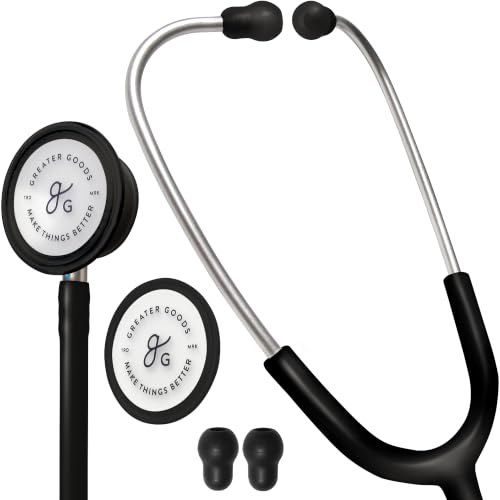
Stainless steel where it counts — the chestpiece and the headset — for a scope that shrugs off daily patient care.
Stainless steel is the phrase to focus on here. Both the chestpiece and the binaural headset are built from it, which is a step above the aluminum and composite builds most affordable scopes use. That extra mass does two things: it dampens room noise and it survives being dropped in a hallway. The chestpiece rotates a full 360 degrees, so you can swing between the tunable diaphragm and the traditional bell with one thumb.
For your daily routine, the 29-inch overall length gives you room to work across a bed without leaning in. The internal tension spring holds even headset pressure, which is what keeps the eartips sealed without pinching. And a non-chill rim on the chestpiece means you are not pressing cold metal to a patient’s back on a winter morning.
Two details set this apart from the pricier Littmann options below. First, every unit is individually sound-tested with both sides of the chestpiece checked, and an inspection card arrives in the box. Second, spare eartips and an extra diaphragm are included, with free replacements for as long as you own it. The catch is weight and price both climb with that steel — you are paying for durability, not for the lightest thing you can hang around your neck.
Where the steel pays off
- Stainless steel chestpiece and headset resist the wear of daily patient care
- 360° rotating dual head switches between tunable diaphragm and bell instantly
- Individually tested, with an inspection card in the box
- Spare eartips, extra diaphragm, and free lifetime replacements included
Know before you buy
- Steel construction adds heft compared with aluminum scopes
- No published weight spec on the listing, so try one before committing to a full shift
Pick this one if: you want the toughness of stainless steel and a rotating head without stepping into the top price tier.
Keep looking if: a featherweight scope is your priority above all else.
5. 3M Littmann Lightweight II S.E. Stethoscope, 2450
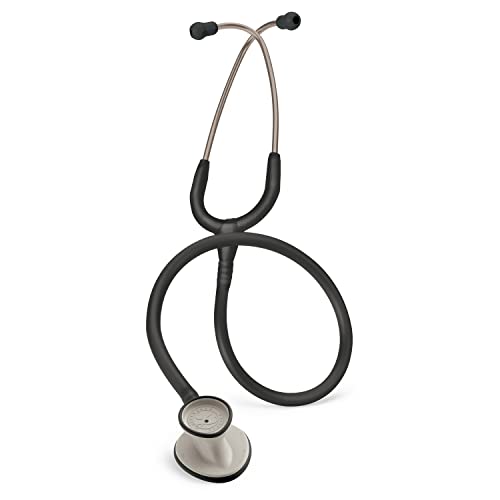
The 118-gram scope with a teardrop chestpiece shaped to slide under a blood pressure cuff.
That teardrop shape is the practical detail most people miss. It is narrower at the top, so it slips under a cuff or around a bandage without you wrestling the patient’s arm into position. At 118 grams it is the lightest adult scope Littmann makes, and it sits comfortably on the neck through a full shift.
The chestpiece is dual-sided: a tunable diaphragm on one side and an open bell on the other. Press lightly on the diaphragm and low frequencies come forward; press firmly and highs sharpen up. That gives you both ends of the spectrum without a separate bell swap. Soft-sealing eartips hold a proper acoustic seal. At 28 inches of overall length you get a reasonable working reach — a touch shorter than the Greater Goods 29-inch span above it, but close enough that most people will never notice.
One honest note: the tunable diaphragm rewards technique. If you press with a heavy hand every time, you will hear high frequencies whether you wanted them or not. This scope is best for nursing students and floor nurses who value low weight and easy cuff work. If you want maximum loudness, the Classic III further down the list is the louder instrument.
What the shape buys you: a teardrop head plus 118 grams makes cuff readings and bandage checks noticeably less fiddly.
Needs a light touch: the tunable diaphragm responds to pressure, so a firm-handed press will pull high frequencies forward if you want them or not.
Made for: nursing students and floor nurses who take manual blood pressures constantly and want the lightest Littmann option.
Skip the tunable style if: you prefer a dedicated bell you can flip to without modulating pressure.
6. Littmann Classic III Stethoscope, 5620
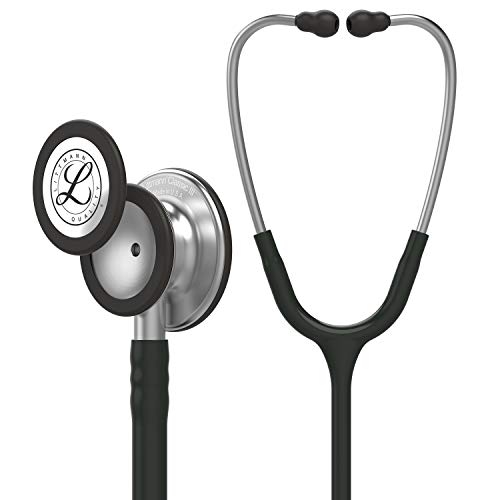
The dual-sided stainless chestpiece that lets you flip between an open and a closed bell with one turn.
If you want a scope that lasts five years of shifts, buy a dual-sided stainless chestpiece like this one. The chestpiece is stainless steel on both sides — an open bell on one, a tunable diaphragm on the other. The closed-bell configuration is built for listening to low frequencies below 120Hz, which is where Korotkoff sounds (the tapping sounds you hear when taking blood pressure) and low-pitched murmurs live. A non-chill bell sleeve keeps the patient side warmer on contact.
Against the Lightweight II S.E. above, the trade is clear: this one is the louder, more capable instrument, and the Lightweight II is the one you buy to save your neck. Here you get a stainless chestpiece in place of resin composite, and soft-sealing eartips tuned for sound occlusion. It handles adults and pediatric patients on the same head, which is why it turns up in offices, general wards, OB/GYN, and urgent care.
The five-year warranty and USA design and manufacture answer the durability question directly. Weighing in at 0.35 kg, it is heavier than the featherweight ADC and the Lightweight II, so if you have never worn a stainless scope through a twelve-hour shift, borrow one for a day first. For everyone else, this is the last scope you will need to buy.
Why floor nurses reach for it
- Dual-sided stainless chestpiece with open or closed bell for both frequency ranges
- Tuned for low frequencies below 120Hz, where Korotkoff sounds sit
- Works for adult and pediatric patients on the same instrument
- Five-year warranty and USA design and manufacture
The honest bill
- At 0.35 kg it is noticeably heavier than the lightest scopes here
- It is the priciest option on this list by a clear margin
The long-game buy: pick this if you are past student stage and want one scope that handles adults, pediatrics, and low-frequency detail without compromise.
Hold off if: you are still in coursework and a lighter, cheaper scope will get you through clinicals.
Know the Specs
Dual-head vs tunable diaphragm
A dual-head chestpiece has two separate listening surfaces — a bell for low frequencies and a diaphragm for high ones — and you rotate the stem to switch. A tunable diaphragm does both jobs with one surface by responding to how hard you press. Dual-head is more intuitive while you are learning; tunable is faster when you are working one-handed.
Weight in ounces and grams
This is the number that decides whether you wear the scope or leave it in a pocket. Adults scopes on this list run from just over 3 ounces up to nearly three-quarters of a pound. Lighter means less neck fatigue over long shifts; heavier usually means a denser chestpiece that blocks more room noise.
Chestpiece material
Aluminum and resin composite keep a scope light and affordable, which is what lets a budget tier exist at all. Stainless steel adds mass, resists drops, and dulls background sound. Neither is wrong — pick aluminum for quiet classrooms and stainless steel for noisy wards.
Tube length and reach
Total length runs from about 9.5 inches on compact scopes up to 31.5 inches on teaching models. Longer gives you more working distance across a bed and better isolation from room noise; shorter keeps the scope out of the way in tight spaces and pockets more easily.
Common Questions
Will an affordable stethoscope get me through nursing school?
Is a dual-head stethoscope better than a single-head one?
What does a tunable diaphragm actually do?
How heavy is too heavy for a stethoscope around the neck?
Do I need a stainless steel chestpiece?
Why do some stethoscopes have two sets of eartubes?
Can I replace worn eartips and diaphragms?
Does a longer tube make a stethoscope harder to hear with?
What is the difference between the Littmann Lightweight II and the Classic III?
Will a budget stethoscope work for taking blood pressure manually?
The Bottom Line
For most buyers chasing the affordable stethoscope, the MDF Acoustica MDF747XPBO is the spend that makes sense — a true bell and diaphragm on a rotating stem, 4.83 ounces on your neck, and replacement parts for life. If a long shift has already taught you what a heavy scope feels like, the ADC Adscope 619 at 3.7 ounces over 30 inches is the kinder wear. And when you are ready to stop upgrading, the Littmann Classic III is the one to reach for.
One last thought on the Liteweight II S.E. — 118 grams with a teardrop head is a genuinely smart shape for anyone whose day is full of cuffs and bandages. Pick the scope that matches your shift, and it will outlast three impulse buys.
How we choose
We do not accept paid placement. Every pick is matched to a real buyer and a real use-case; we do not hands-on test units.
Sources
Specifications: manufacturer listings and product documentation. Review insights: verified customer reviews, as of November 2026. Pricing: not shown on this page (it changes often); check the current price via the retailer link.
As an Amazon Associate, Doctor Guide Online earns from qualifying purchases. This does not affect which products we feature.