
Specs are compiled from manufacturer listings and verified buyer reviews and can change over time — please confirm the key details on the product page before buying.
If a home blood pressure monitor gives you a different number every time you sit down, the problem is usually the cuff, not the electronics. A cuff that is too small or wrapped too loosely is the most common cause of a reading that runs high. So the right question is not which brand looks most medical — it is which monitor fits your arm properly, has been validated against a recognised standard, and is simple enough that you actually use it every morning. This guide covers nine monitors that clear those bars, from budget-friendly upper-arm units to connected models that log years of readings for your doctor.
This guide is built by comparing the manufacturers’ published specifications and the patterns across verified customer reviews, so you get each pick’s real strengths and trade-offs instead of marketing spin.
Below you will find the honest differences between them: cuff ranges, memory storage, validation standards, and where each one falls short. The single biggest upgrade to your home readings is a cuff that truly fits your arm.
Top Picks
How To Choose The Best Accuracy Blood Pressure Monitor
Accuracy is not a single spec-sheet feature. It is the result of three things lining up: a validated measuring engine, a cuff that matches your arm, and a measurement routine you can repeat. Get those three right and almost any well-made upper-arm monitor will serve you for years.
Start with the cuff, not the screen
A cuff that is too tight squeezes the artery and pushes your reading up. One that is too loose lets air escape and does the same thing. Measure the circumference of your upper arm at its midpoint, then check that the monitor’s stated cuff range covers it with room to spare. Most of the picks here span roughly 8.7 to 16.5 or 9 to 17 inches, which covers the majority of adult arms — but if your arm sits near the top or bottom of that range, look for a model with an XL option.
Look for a real validation standard
A monitor described as “clinically validated” should name the protocol it passed, such as ESH, BIHS, or FDA clearance. That is the difference between a device that was tested against a reference standard and one that simply says it is accurate. A manufacturer’s own claim of “advanced accuracy technology” means less than a named standard printed on the box.
Decide how much memory you need
If you only check your pressure now and then, a monitor that stores the most recent reading is plenty. If you are tracking a trend for your doctor, look for one that stores dozens or hundreds of readings and can average them. Dual-user memory matters for couples so two people’s numbers never mix.
Think about how you will actually use it
A monitor that lives in a drawer gets used less often than one that sits on the nightstand or syncs to your phone. Consider whether app syncing and Wi-Fi will help you stay consistent, or whether a simple one-button unit with a big display will get more use. Either approach works — pick the one that matches your routine.
Side-by-Side Comparison
| Model | Best For | Cuff Range | Memory | Validation | Amazon |
|---|---|---|---|---|---|
| Braun ExactFit 1 Blood Pressure Monitor, Upper Arm, BUA5000★ Best Overall | Simple one-button daily checks | 8.6–16.5 in | Last reading | Clinically validated | Amazon |
| iHealth Track Blood Pressure MonitorBest Value | App tracking on a budget | 8.7–16.5 in | 99 on device, unlimited in app | ESH 2010 | Amazon |
| OMRON Iron Blood Pressure MonitorCompact Pick | Compact travel-friendly monitoring | 9–17 in | — | Advanced Accuracy Technology | Amazon |
| Blood Pressure Monitor AES-U382 | Couples and larger arms | 9–17 in | 2 users × 90 readings | FDA 510(k) Cleared Class II | Amazon |
| Microlife BPM2 Blood Pressure Monitor | Comfort during measurement | 8.7–16.5 in (XL sold separately) | Last 60 results | — | Amazon |
| Meraw Blood Pressure Monitor Pink | Bluetooth trend sharing | 8.7–16.5 in | App-based tracking | ESH performance standards | Amazon |
| WITHINGS BPM Connect Blood Pressure Cuff | Long-life rechargeable convenience | 22–42 cm | Unlimited in Health Mate app | FDA cleared | Amazon |
| WITHINGS BPM Vision Blood Pressure Monitor | Big-screen guided readings | 8.7–16.5 in | Unlimited in Withings app | FDA cleared | Amazon |
| Garmin Index BPM Blood Pressure Monitor | Household sharing and reports | 9–17 in | Up to 16 users in Garmin Connect | FDA-cleared and clinically validated | Amazon |
Detailed Reviews
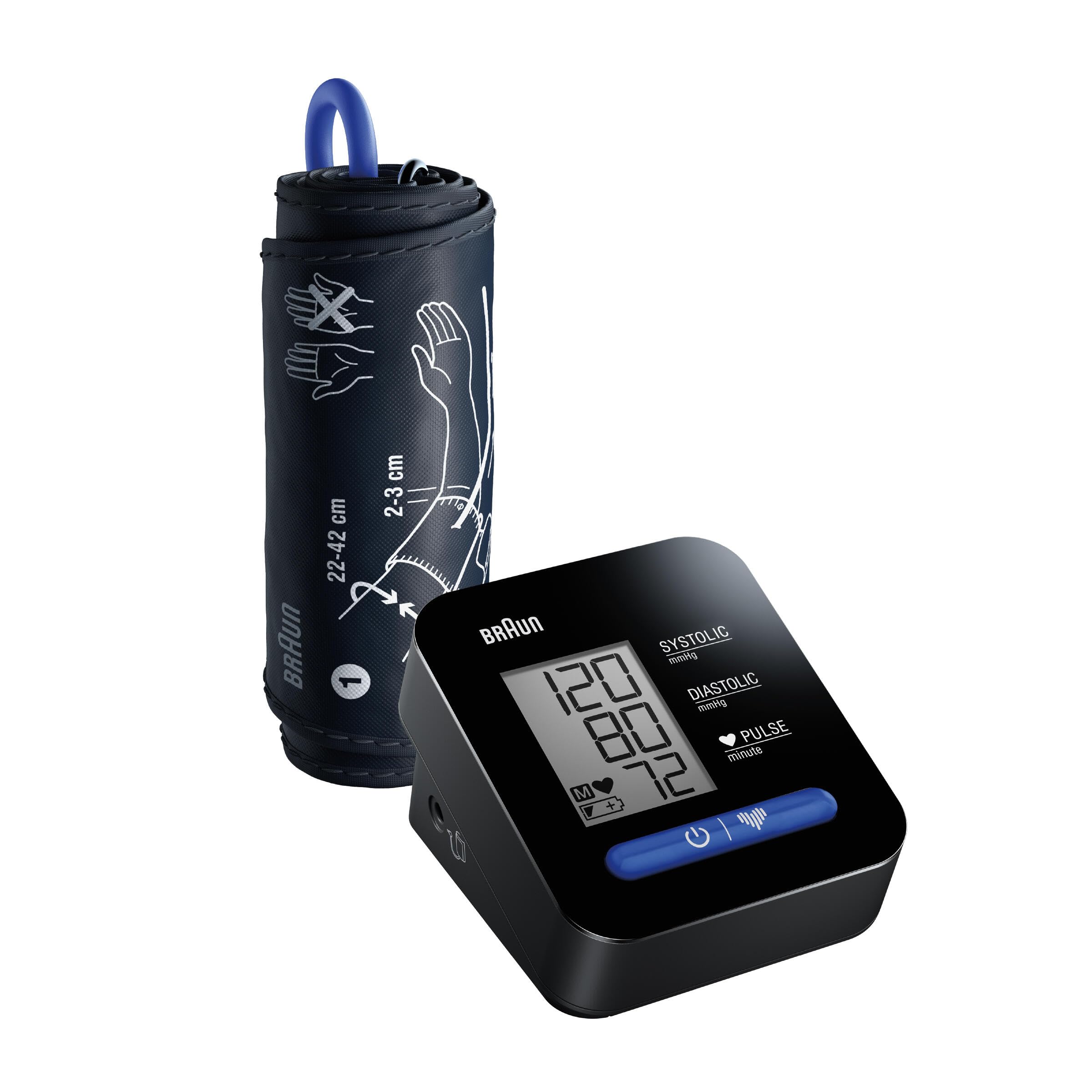
1. Braun ExactFit 1 Blood Pressure Monitor, Upper Arm, BUA5000
Our pick — 4.5+★ from 300+ verified ratings; the strongest balance of quality and price.
A one-button upper-arm monitor that fits almost any adult arm and keeps the routine dead simple.
The Braun ExactFit 1 earns the top slot because it gets the fundamentals right without asking you to learn anything. One press and the cuff inflates, measures, and shows your systolic and diastolic numbers on a large, easy-to-read display. For a first-time buyer, that is exactly the right amount of complexity. The universal cuff covers upper arms from 8.6 to 16.5 inches, which means most adults in a household can share the same unit without hunting for a different cuff size.
The measurement engine is clinically validated for upper-arm monitoring, and the unit flags an irregular heartbeat during the reading. That flag is a signal worth mentioning to your doctor, not a diagnosis on its own. It also automatically stores your most recent measurement, so you can look back at the last result without writing anything down. Four AA batteries come included, so the unit is ready the day it arrives.
Where it asks patience: accuracy feedback is mixed in the wider review pool, with some home users getting results that disagree with their doctor’s cuff. In practice that is the story with almost every upper-arm monitor — a poorly wrapped cuff or a reading taken right after coffee will skew the number. Sit still, wrap the cuff snugly at heart level, and take two readings a minute apart. If those two agree with each other, you have a solid baseline. The single-reading memory is also thin for anyone tracking a trend over weeks.
Where It Wins
- One-button operation that first-time users can run without the manual
- Universal cuff spans 8.6 to 16.5 inches — broad enough for most adults
- Irregular heartbeat detection built into every reading
- Large display that is readable without glasses
- Batteries included, so it works from the start
Where It Gives Ground
- Stores only the last reading, so no trend history on the device
- No app or Bluetooth sync — you write numbers down the old way
- Accuracy depends heavily on your cuff technique
Reach for this if: you want a dependable daily upper-arm monitor with the least possible fuss, and you are happy to jot readings in a notebook.
Look elsewhere if: you need weeks of stored history or phone syncing to spot a trend between doctor visits.
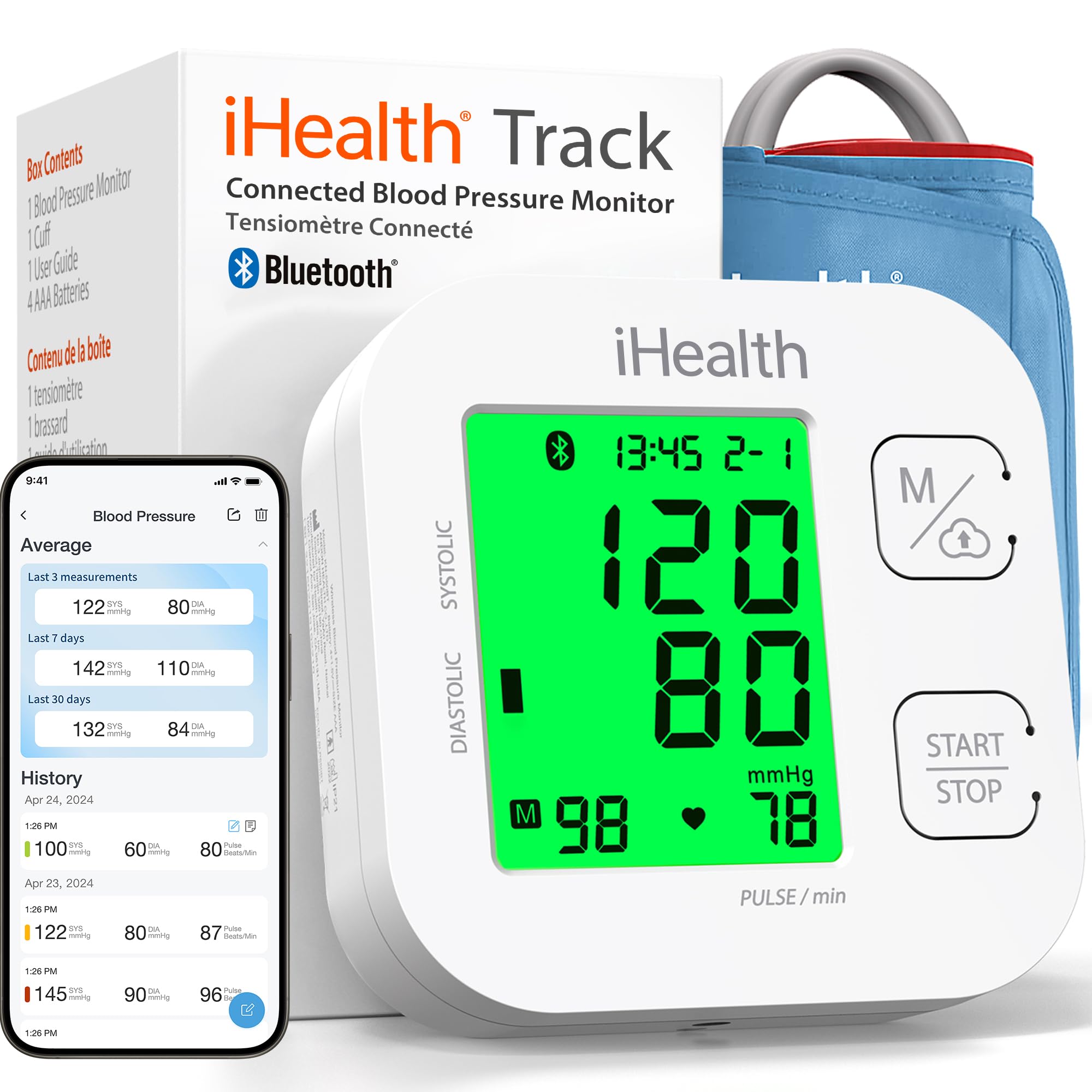
2. iHealth Track Blood Pressure Monitor
The budget-friendly monitor that logs unlimited readings to your phone and tells you at a glance if the number is high.
What makes the iHealth Track worth owning is the combination of a 99-reading on-device memory and unlimited storage in the free iHealth app for iOS and Android. That is the difference between checking a number and building a record. The display is oversized and backlit with large digits, and it color-codes the result in green, yellow, or red so you can tell at a glance whether you are in a normal range or one worth discussing with your doctor.
It meets ESH 2010 performance standards, which is a named validation protocol rather than a vague “accurate” claim. The wide-range cuff fits upper arms from 8.7 to 16.5 inches, and the unit runs on four AAA batteries that are included. It also identifies heart rhythm disturbances and shows a warning symbol after the measurement if it detects one. Setup is two buttons, and no calibration is needed.
The honest trade-off is the smartphone side. Bluetooth pairing works best when you allow the app the permissions it asks for; if your phone’s OS has moved on, check that it meets the app’s stated minimum (iOS 12.0 or later, Android 9.0 or later, Bluetooth 4.0). Some users see readings that run higher than expected, which is why a steady technique and a couple of practice readings matter so much. Get those right and this is the best value in the group by a wide margin.
Why it punches above its tier: 99 stored readings on the device plus unlimited in the app is a memory standard most budget monitors do not approach. The color-coded display turns a raw number into an instant read.
One plain warning: this monitor is small enough to live on a nightstand, but its accuracy is only as good as your willingness to read the manual and take two readings each time.
The best fit: anyone who wants app tracking without paying a premium for it, and who checks their pressure several times a week.
Worth a pass if: you do not use a smartphone, or you want the simplest possible device with no pairing step.
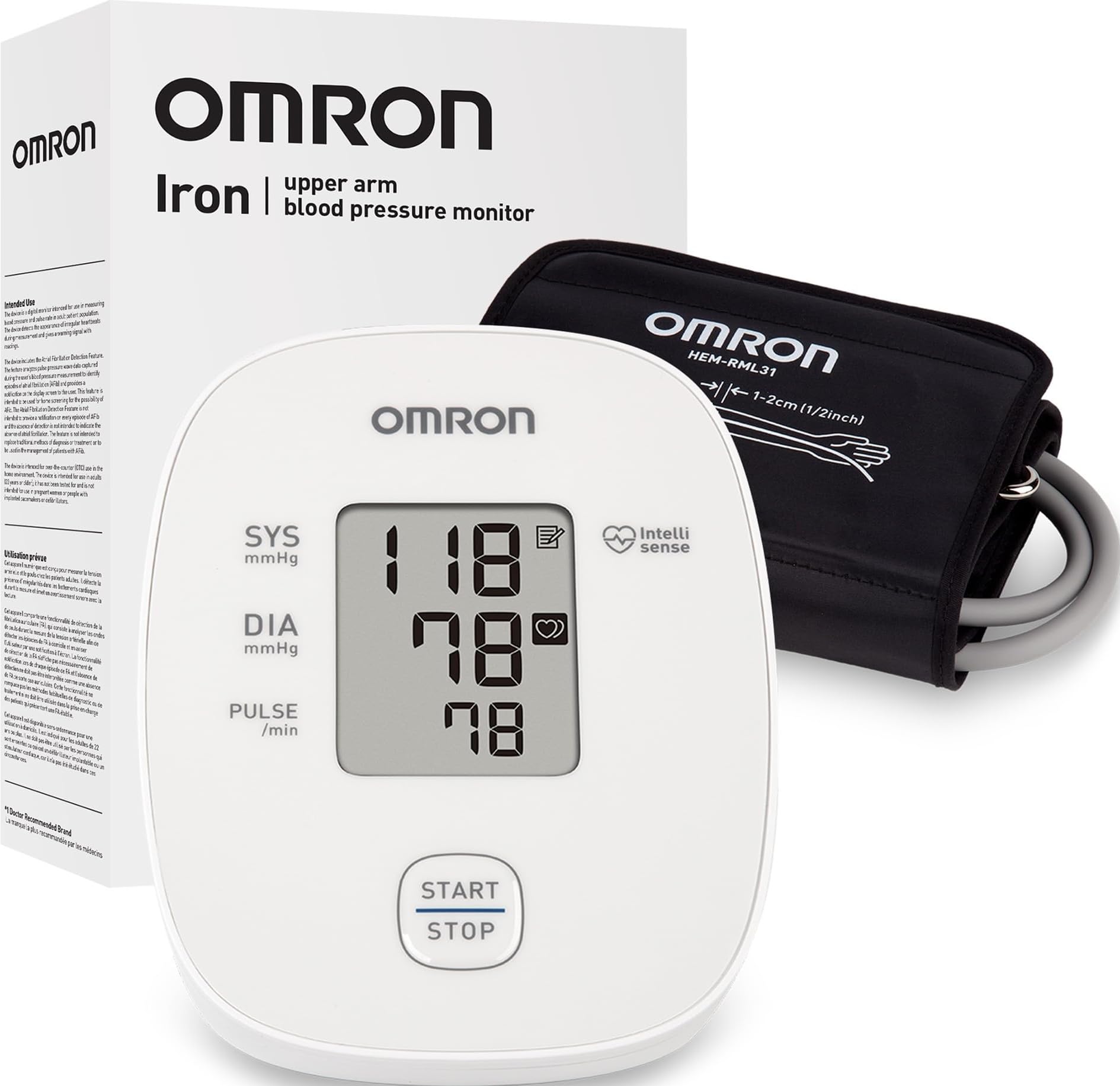
3. OMRON Iron Blood Pressure Monitor
A genuinely pocketable upper-arm cuff that travels without complaint and still reads at home.
At 8.82 ounces, the OMRON Iron is the model you can drop in a carry-on or a desk drawer without noticing it. The wide-range D-ring cuff fits arms from 9 to 17 inches, giving it one of the broader ranges in this group. One-touch operation means the measurement is a single press, and the Irregular Heart Beat Indicator flags irregular beats during the reading.
OMRON’s Body Movement Detection is the feature that separates this one from a plain automatic cuff. It alerts you when your arm has moved enough during the reading to skew the number, which is a real problem for anyone who fidgets or talks while the cuff inflates. The unit runs on four AA batteries and includes the monitor, cuff, manual, and quick-start guide. Everything you need is in the box.
The trade-off: at this size, the display is smaller than the large-screen models in this guide, and there is no Bluetooth or app logging. You get the current reading and that is it. If you want a device that fits in a travel bag and takes reliable readings on the road, this is the one. If you want trend history, look at the iHealth or the Garmin.
The travel argument: 8.82 ounces and a body small enough to pack give it a real advantage over the bulkier units that stay home. The D-ring cuff from 9 to 17 inches covers larger arms that many standard monitors miss.
The cost of that size: no memory storage and no app. It sets a reliable number on a small screen and nothing more.
Pick it for: a monitor that goes in the suitcase, the RV, or the office bag and still gives you a proper upper-arm reading.
Not the one for: anyone who wants a stored record of readings over time or hands-free syncing to their phone.
4. Blood Pressure Monitor AES-U382
The monitor that takes three readings and averages them so a single bad measurement cannot mislead you.
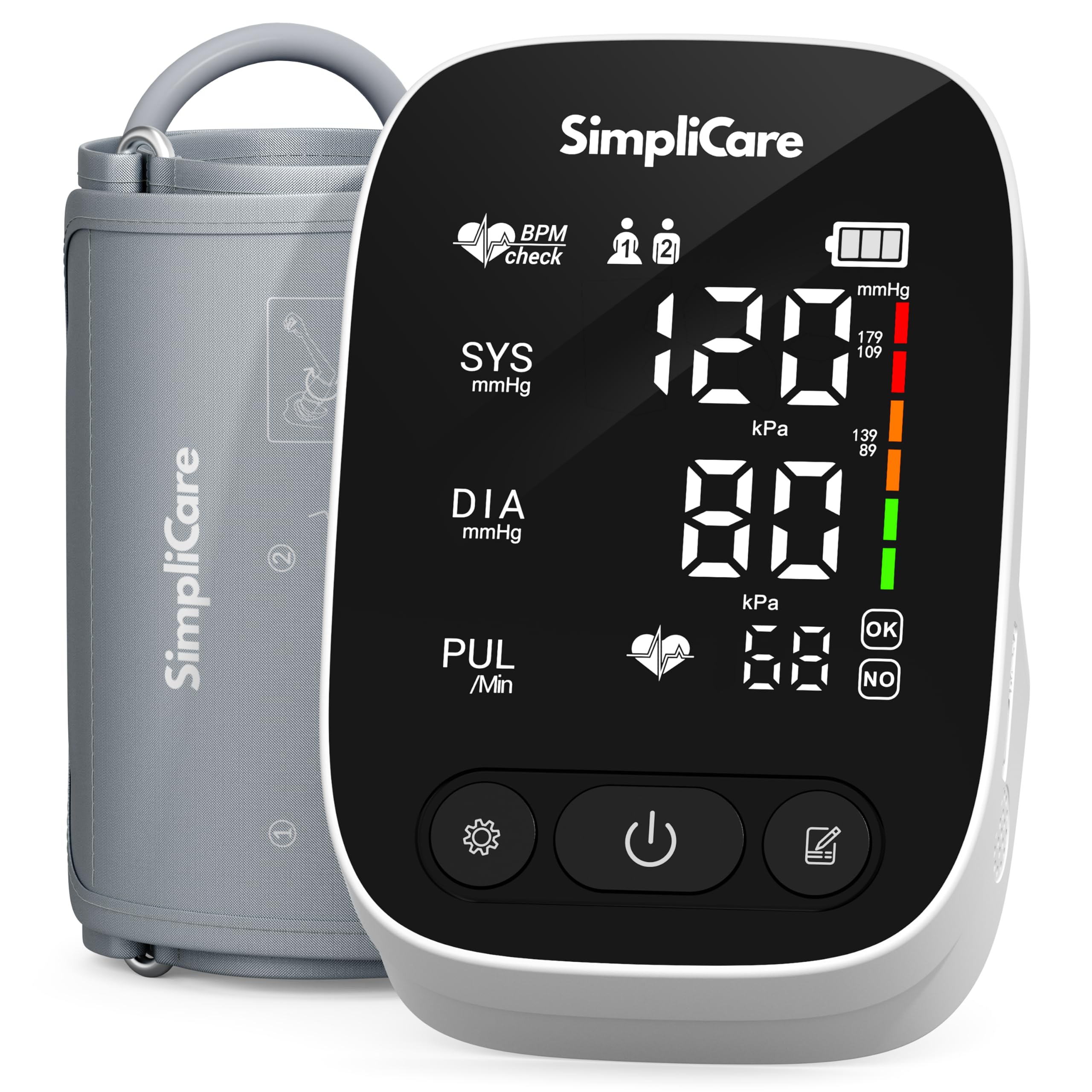
Two things stand out here. The first is the 3-Reading Average Technology, which automatically takes three consecutive readings and averages them to reduce variation. Anyone who has watched their pressure bounce around on a home cuff will recognise why that matters — it filters out the noise that a single reading picks up. The second is the dual-user memory, which stores up to 90 readings per user independently, so two people in a household can track their own history without merging data.
The cuff is an XL wide-range model that fits upper arms from 9 to 17 inches, comfortable across most adult sizes including larger arms. Results appear on a 5.2-inch LED display with a color-coded indicator in green, yellow, or red, so you can see where the reading sits at a glance. It carries FDA 510(k) Cleared Class II status, meaning it meets that standard as a medical device rather than a general consumer gadget. It runs on USB-C or four AAA batteries, which gives you flexibility at home or while travelling.
The catch is scale. Accuracy feedback so far is positive, but a monitor like this one should be judged over months, not weeks. It is also a large-screen unit, not a pocket device — the display is the feature, so it lives on a shelf or a nightstand rather than in a bag.
The honest read: the dual-user memory and 3-reading average are features you normally find further up the price ladder. For a couple both tracking their pressure, that combination is genuinely useful.
The question worth asking: no app sync, so the numbers stay on the device. If your doctor wants a printable trend, you will be reading the display and writing values down.
The natural home: a shared household where two people each want their own reading history without buying two monitors.
Think twice if: you expect a long track record of owner feedback before you commit, or you need readings to sync to a phone app.
5. Microlife BPM2 Blood Pressure Monitor
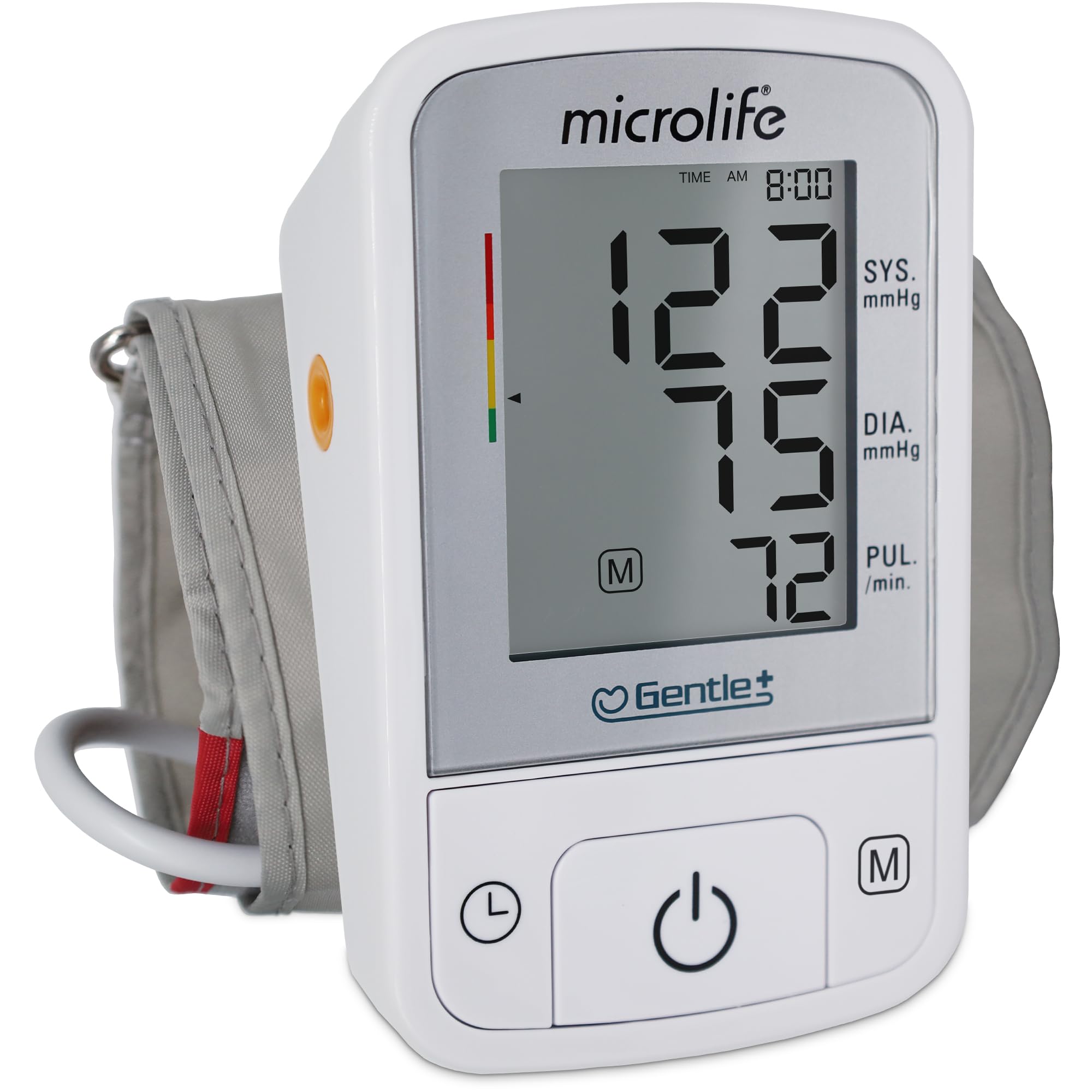
The cuff that squeezes less and measures faster — a quiet win for anyone who dreads the inflation squeeze.
Most upper-arm monitors inflate hard and hold. The Microlife BPM2 uses what the manufacturer calls Gentle+ Technology, which applies less pressure and takes less time, and the comparison is genuinely noticeable if you measure twice a day. That matters beyond comfort: a reading taken while you are braced against a tight cuff can run high, so a gentler squeeze can help you stay relaxed through the measurement. The contoured cuff is easier to put on and has a soft outer fabric, and it fits upper arms from 8.7 to 16.5 inches.
The limit: the standard cuff covers 8.7 to 16.5 inches, and the XL cuff for larger arms is sold separately. If your arm measures near the top of the standard range, plan on buying the separate cuff rather than squeezing into the wrong one. It takes four AA batteries, and the Microlife AC adapter is also sold separately, so decide up front if you want to run it on mains power.
What earns it a place: a Rated AA by BIHS accuracy result combined with a genuinely gentler inflation cycle is a pairing few monitors at this level offer. Sixty stored readings and an average display give you something to bring to an appointment.
The catch to plan for: the XL cuff for larger arms is a separate purchase, so check your arm measurement before you order.
Suits you if: you measure daily and want the least uncomfortable cuff you can get, with a rated accuracy result behind it.
Best avoided if: your upper arm measures beyond 16.5 inches and you would rather not buy a separate XL cuff.
6. Meraw Blood Pressure Monitor Pink

A bright little upper-arm monitor built around one-button readings and sharing data with your doctor.
The Meraw’s distinguishing feature is the intelligent pressurization system — an algorithm that adjusts cuff pressure automatically to reach what it treats as the right level for the reading, rather than running a fixed inflation curve. The cuff fits upper arms from 8.7 to 16.5 inches, and the large backlit LCD sits at a 25-degree tilt so you can read it while your arm is still in the cuff. That matters when the screen would otherwise sit flat on a table.
Pair it with the Meraw Health App and your readings sync to your phone, where you can view trends and share a report with your doctor or family. The unit meets ESH performance standards for home use, runs on four AAA batteries, and includes a USB charging cable. The manufacturer backs it with a 12-month warranty. The pink colourway is a genuine differentiator if you want a monitor that does not look like a piece of hospital equipment sitting on the nightstand.
The connectivity is the part that gets the most friction. Bluetooth pairing is not always instant on the first try, and the app experience matters as much as the hardware. If you are comfortable with a smartphone, the trend sharing is a real advantage. If you would rather not deal with an app at all, the on-device display still works fine on its own. One safety note the manufacturer states clearly: this device is not suitable for use on patients with implanted electrical devices such as cardiac pacemakers or defibrillators.
The Case For It
- Tilted 25-degree backlit display is readable while your arm is still in the cuff
- Bluetooth app sharing makes it easy to send a trend report to your doctor
- ESH-rated pressurization system and 12-month warranty
- One-button operation keeps it simple for daily use
The Case Against
- Bluetooth pairing can take more than one attempt
- Not suitable for anyone with an implanted electrical device such as a pacemaker
- On-device memory is not the headline — the app is where tracking lives
Makes sense for: a phone-first buyer who wants a colour choice, a visible display, and a simple way to share trends with a clinician.
Look past it if: you need a device cleared for use with a pacemaker or other implanted electrical device.
7. WITHINGS BPM Connect Blood Pressure Cuff

A rechargeable, Wi-Fi-syncing cuff with a six-month battery — and the most debated accuracy record in this list.
The Withings BPM Connect makes a strong case on convenience. The built-in rechargeable battery lasts up to six months per charge, and there is an in-app battery monitor so you are not caught with a dead cuff at the wrong moment. Readings sync automatically over Wi-Fi or Bluetooth to the Health Mate app, where you get unlimited history and color-coded feedback on the display case itself. The cuff band covers 22 to 42 cm, and the unit is FDA cleared as a portable upper-arm monitor.
What wins people over is the combination of the rechargeable battery and the automatic sync. You take the reading, the cuff pushes the number to the app, and the record builds without you touching a notebook. For someone who checks pressure a few times a week and wants a clean long-term log, that workflow is genuinely frictionless.
The thing to weigh carefully is accuracy. Across the broader owner population, a meaningful share of users report readings that run consistently high — in the range of 20 to 30 mmHg too high — and reliability feedback divides between those who find it dependable and those who do not. That is a bigger caveat than any other pick here carries, and it is the reason to bring a few readings to your doctor to cross-check before you rely on the trend. That convenience only helps if the numbers are trustworthy. Treat this as a strong choice for someone already comfortable with the Withings ecosystem, and take the time to compare against a cuff reading at your next appointment.
The honest verdict: six months of battery and Wi-Fi sync make this the easiest monitor in the group. The accuracy record is the part that requires a real sanity check against your doctor’s readings before you put weight on the app trend.
The right owner: a Withings-app user who values the rechargeable battery, automatic syncing, and a clean color-coded display — and who will verify the numbers with a professional cuff.
Not the safest pick if: accuracy is the single thing you care about and you want a clean track record from the start.
8. WITHINGS BPM Vision Blood Pressure Monitor
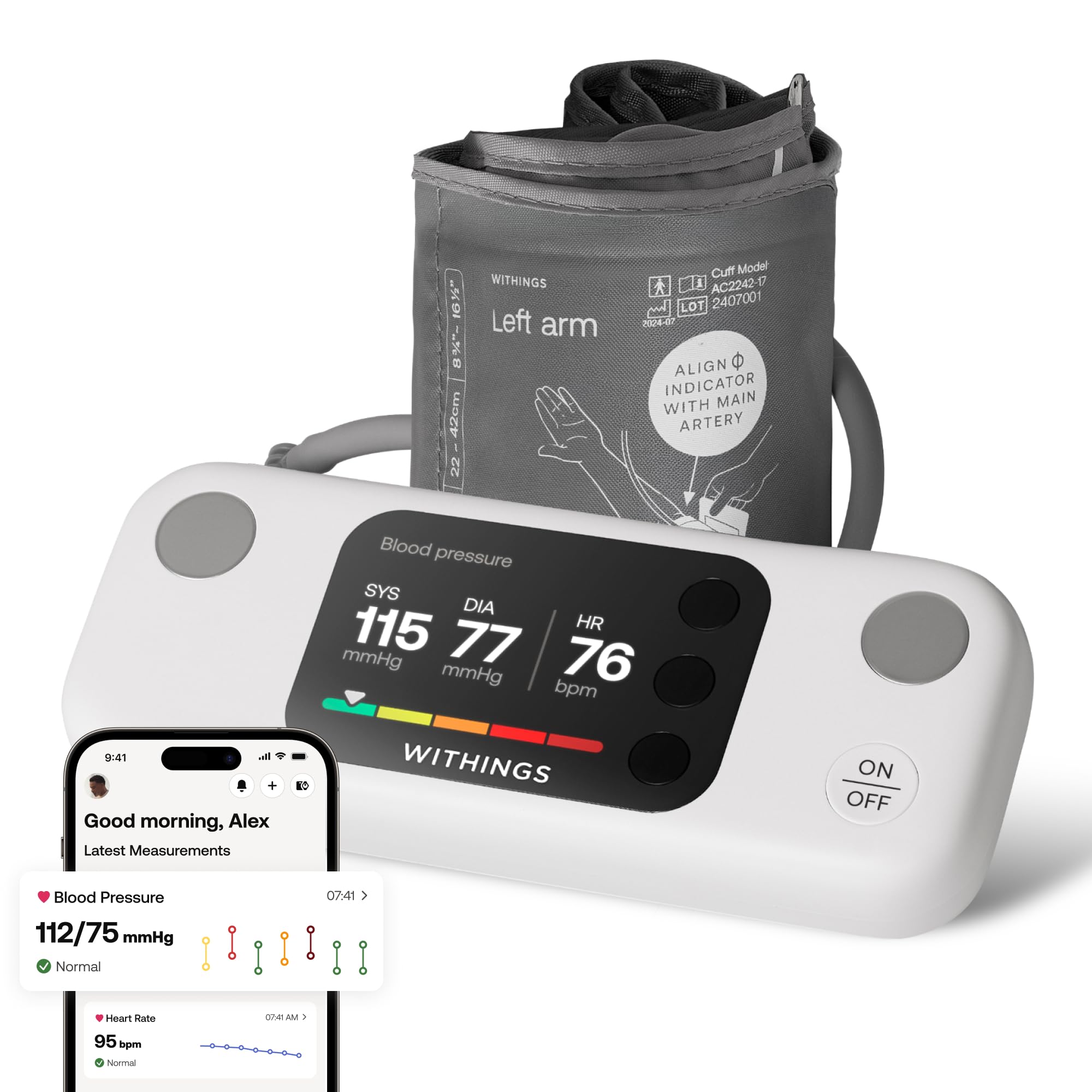
A big-screen cuff that walks you through the reading, then shows whether the result sits where it should.
If you have ever wondered what your number actually means, the BPM Vision answers that directly. The 2.8-inch LCD shows systolic, diastolic, and heart rate, then color-codes the result against the official US hypertension levels as defined by the American Heart Association. Built-in tutorials guide you through the setup at each step, which helps you take the reading under the right conditions rather than guessing. The standard cuff fits arms from 8.7 to 16.5 inches, and the protective case doubles as a stand so the screen sits at a readable angle on a table.
The battery story is the standout. One battery gives up to 1-year battery life, and there is no rechargeable cycle to remember. Data syncs automatically over Wi-Fi or Bluetooth to the Withings app, which keeps unlimited history and is compatible with iOS 18+ and Android 12+. The unit is FDA cleared as a portable upper-arm monitor, and the manufacturer states it is incompatible with pacemakers.
The honest limit is the connected-ecosystem requirement. Setup through the app is where most of the friction lives, and some buyers report syncing issues that stop readings from reaching the phone. Accuracy and value feedback is mixed in the wider pool, so use the guided tutorials and cross-check against a professional reading before you trust the trend. One household detail worth knowing up front: two users cannot share one phone in the app, so a second reader needs their own device.
The feature that earns it the spot: the 2.8-inch display plus AHA-referenced color coding is the clearest on-device interpretation of a reading in this entire guide. Guided tutorials plus a year of battery life remove the two most common reasons home monitors get abandoned.
What to plan for: the app is not optional if you want history, and syncing can misbehave. If you need readings without a phone in the loop, the simple non-connected monitors will frustrate you less.
For the reader who wants clarity: the big screen and guided setup make it the friendliest monitor here for someone learning what their numbers mean.
One household caveat: two people cannot share one phone in the Withings app, so plan on a second device for a partner.
9. Garmin Index BPM Blood Pressure Monitor
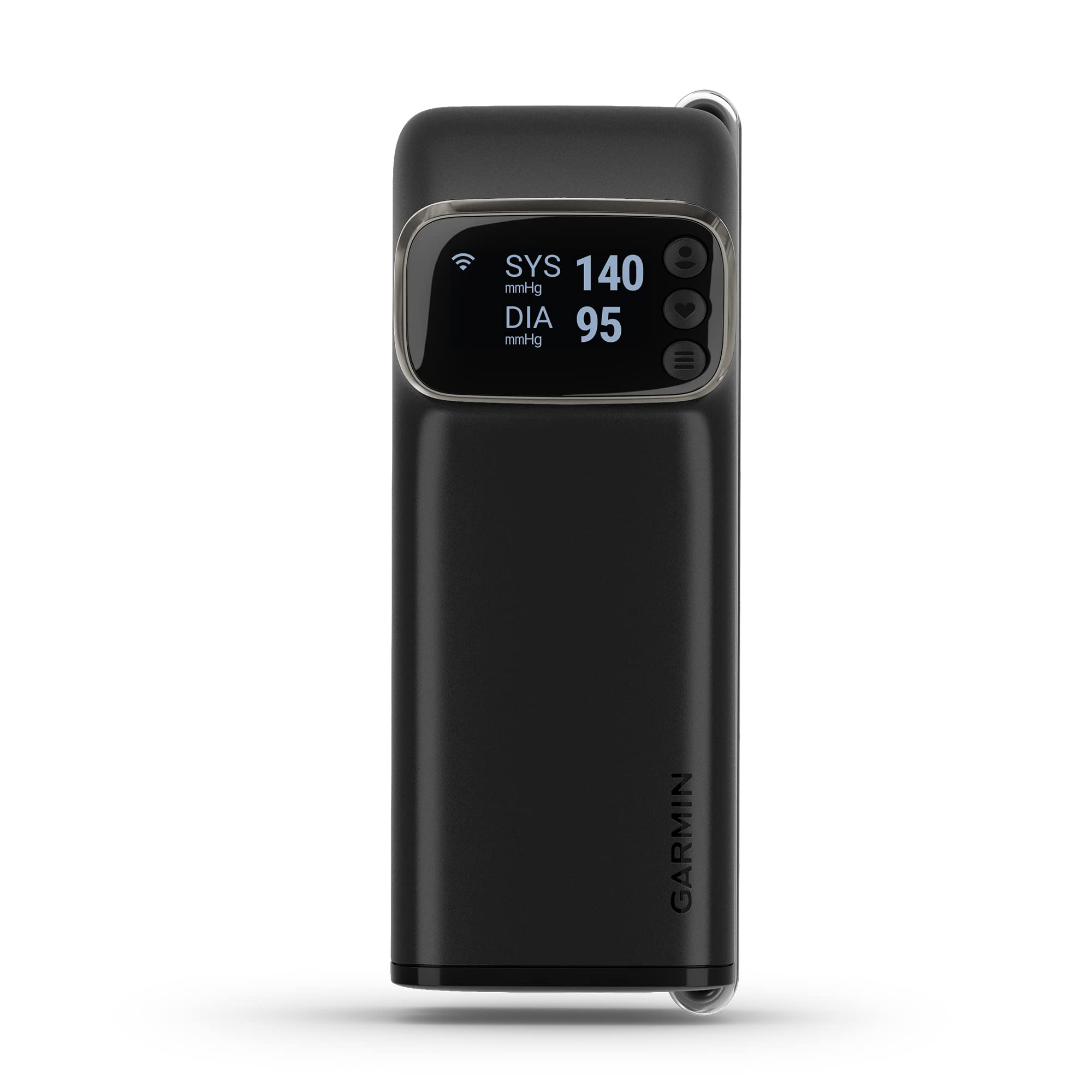
The all-in-one cuff that puts a year of readings into a PDF your doctor can actually use.
The Garmin Index BPM is the most complete reporting device in this guide. It is FDA-cleared and clinically validated as an upper-arm monitor, measuring systolic and diastolic pressure plus heart rate when used properly. The integrated display means you can take a reading without a phone nearby, and it syncs over Wi-Fi to your Garmin Connect account when you are back in range of a network. The adjustable cuff fits arm circumferences from 9 to 17 inches, which covers most adults, including larger arms.
What makes it a family device is the account handling. Up to 16 users can sync their own Garmin Connect accounts and view their own stats, which is far more separation than the dual-user monitors here. The app builds 7-day, 4-week, and 1-year reports and lets you export them as a PDF to email or hand to your healthcare provider. That is the closest thing to a proper clinical record you can get from a home cuff. Battery life is up to 9 months on four user-replaceable AAA batteries.
Accuracy and reliability feedback divides across the owner pool, with some users reporting dependable readings and others reporting ones that disagree with their expectations. The reporting feature is only as good as the numbers feeding it, so pair any trend with a real take-home reading from your doctor. The Index BPM is for people 18 years or older, which is note if you were considering it for an older teen.
Where it leads the field: the ability to create 7-day, 4-week, and 1-year reports and export them as a PDF is a feature none of the other monitors here match. Sixteen separate Garmin Connect accounts turns one cuff into a household tool.
The check first: accuracy feedback is mixed, so confirm the readings against your doctor’s cuff before you treat the exported trend as gospel.
Made for: a multi-person household that wants one monitor and proper exportable reports for a clinician.
A reason to pause: it is the most expensive pick here and its accuracy record is not unanimous — worth a cross-check before you rely on it.
Know the Specs
Cuff Range and Fit
The cuff range is the arm circumference a monitor’s cuff will fit, and it is the single spec that most affects accuracy. A cuff that is too small squeezes the artery and reads high; one that is too loose lets air leak and does the same. Measure your upper arm at its midpoint before you buy. Most picks here cover roughly 8.7 to 16.5 or 9 to 17 inches. If your arm measures near the top of a range, choose a model with an XL option rather than forcing a fit.
Clinical Validation Standards
A named validation standard is the clearest evidence that a monitor’s measuring engine has been tested against a reference. ESH is a European standard for home blood pressure devices, BIHS is a British rating system, and FDA 510(k) Cleared Class II is US clearance as a medical device. A monitor described as accurate without naming a standard is telling you less. Look for the standard on the box or in the description.
Memory and Averaging
Memory determines what you can do with your readings beyond the moment you take them. Some monitors store only the last reading, some store 60 or 99, and some store unlimited history in a phone app. Averaging features take several consecutive readings and combine them to smooth out natural variation. If you are tracking a trend for your doctor, memory plus averaging is far more useful than a single number.
Power and Portability
Most upper-arm monitors run on AA or AAA batteries, with some offering USB or mains power as well. A long battery life — months rather than weeks — matters for a device you check daily. Portability depends on size and weight: compact units suit travel, while large-display models are better left on a nightstand. Choose based on where the monitor will live.
Common Questions
Why does my home blood pressure monitor read higher than the one at my doctor’s office?
Does a home blood pressure monitor need to be clinically validated?
How do I measure my arm to choose the right cuff size?
Is an upper arm monitor more accurate than a wrist monitor?
How often should I take a reading at home?
Can two people share one blood pressure monitor?
What does the irregular heartbeat detection feature actually do?
How long do the batteries last in these monitors?
Is it safe to use a home blood pressure monitor if I have a pacemaker?
Can I email my readings to my doctor?
The Bottom Line
For most people buying an accuracy blood pressure monitor, the Braun ExactFit 1 is the easiest recommendation, because its one-button operation and 8.6-to-16.5-inch universal cuff make consistent readings simple enough that you will actually keep the habit. If you want unlimited app history without paying a premium, the iHealth Track stores 99 readings on the device and unlimited in the app. For a couple or a family, the Garmin Index BPM turns one cuff into a proper record with exportable 1-year reports for your doctor. The one number that should drive your choice is your arm circumference — pick the monitor whose cuff range actually covers it, then confirm the reading against a professional cuff at your next appointment.
How we choose
We do not accept paid placement. Every pick is matched to a real buyer and a real use-case; we do not hands-on test units.
Sources
Specifications: manufacturer listings and product documentation. Review insights: verified customer reviews, as of November 2026. Pricing: not shown on this page (it changes often); check the current price via the retailer link.
As an Amazon Associate, Doctor Guide Online earns from qualifying purchases. This does not affect which products we feature.